


Argentina is another favorite country. We spent 10 months there and still have so much more we haven’t had the opportunity to see. We spent equal time in Buenos Aires and Mar del Plata. We loved our entire experience in this beautiful country. The people are very kind, friendly, and welcoming. Every single person who spoke to me asked, “are you a tourist or do you live here?” To which I always replied, “I’m a tourist.” What came next was something I had never heard from any other country in all of our travels. EVERY SINGLE PERSON said the exact same thing, “You should live here, everyone is welcome here!” They meant it genuinely. I was honestly astonished.
I could also go into how shellshocked I was to be listened to and taken seriously when we went to their medical system for some testing. This was when I realized I had full-fledged PTSD from American healthcare. It was shocking to be treated with such care, attention, and to be listened to the first time. I just want to say one thing to the people of Argentina: Vos quiero mucho. Siempre tendrás un gran pedazo de mi corazón.
Conversations were plenty and I would find myself stopped by strangers on the street regularly who wanted to chat. They are so social and welcoming. Sometimes, they would get so excited that I spoke English that they would insist on speaking English just so they could practice. I, on the other hand, wanted to practice my Spanish. So, our conversations went like this: they spoke to me in English, and I responded in Spanish. Everyone got to practice. On top of it all, I would have experiences like walking on the sidewalk and seeing a waiter that I only met once at a restaurant. When passing, they would wave and say hello with a huge smile as if we were best friends. It was so nice. More importantly, it felt like a small town in such a large city.
To this day, I still listen to Argentine music multiple times a week. I love this country so much. However, we are here today to talk about a very unique Argentine folklorico dance called Malambo.
The Music
First, the music. You will notice in each of the different videos that the dance is done to the same music or something quite similar each time. The music is performed with Argentino bombo (bass drum) and guitar. More complex arrangements include flute, violin, and accordion. With or without the special drumming, you will hear this common theme:
What is Malambo?
Malambo is a traditional dance founded by the gauchos of South America. Gauchos are what Americans would call cowboys, except the cowboys in South America are quite different than their North American counterparts. The style of clothing, music, and entertainment is completely different.
Many of these dances were performed after long days riding horseback as they gathered around a campfire in the pampas. Today, it is one of the most competitive dances in the region and Argentinian gauchos take this competition very seriously. Children learn this dance from very young ages, and it is not uncommon to see a toddler on the stage in many of these competitions. They are quite adorable to watch because they take it so seriously.
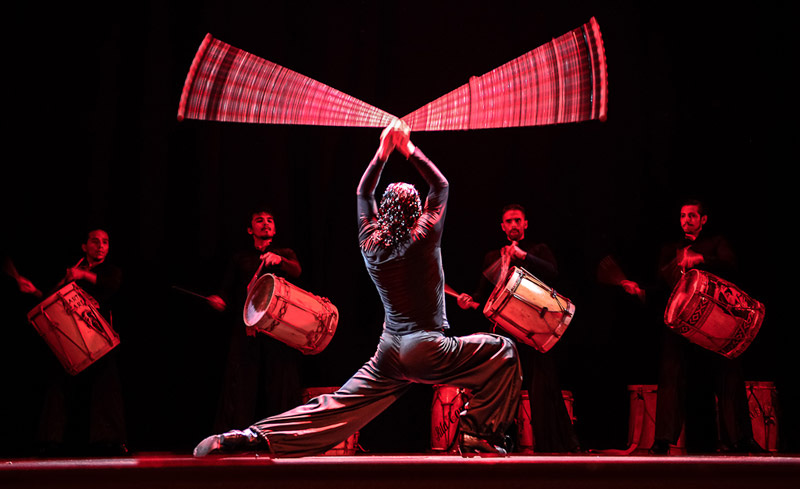
Why would they look so serious? Well, Malambo is not just dancing technique, but also demonstration of strength and bravado. The dancers puff their chests, and in many ways, one can see how horses have inspired the dance. The way their feet paw at the ground often mimics that of a horse preparing to race. The complex footwork and beauty of the dance’s fluid movements heighten the tension in these intense competitive faceoffs. It’s like battle, but with dance.
Argentina is a very large country and as such, there are stylistic differences between the northern and southern regions. There are two Malambo styles: el norteño “the northern” and el sureño “the southern.” The Norteño style derived from the barefoot Sureño tradition. The footwear difference in the north was a direct correlation to the introduction of boots from the Spaniards who arrived on their shores. Each type has a different musical accompaniment. Malambo Norteño has more forceful stomping (likely because of the boots) and a faster tempo. Malambo Sureño has gentler footwork (performed barefoot) and a much slower tempo.
Below is a solo example of Malambo Norteño.
Now compare that video to the following example demonstrating both in contrast. Note that not only is the footwear different, so is the dress.
Boleadoras
In addition to the fancy footwork seen so far, you will see additional aspects added to these competitions that include dancing with drums and bolas. Bolas are a type of throwing weapon that has weights on either end of an interconnected cord. These weapons were used to capture animals in order to entangle their legs and preventing them from escape. Used frequently by the gauchos, these weapons are also commonly associated with pre-colonization settlements, especially by the Tehuelche, the indigenous people of Patagonia. The Tehuelche would use the bolas to catch large animals such as guanacos and rheas. The Mapuche warriors used bolas in battle with the Chilean Army during the occupation of Araucanía (1861-1883). They were also used by the Incan armies.

Gauchos used boleadoras to capture cattle that were in motion or wild game. The mechanism by which they would use these weapons relied upon a swinging momentum and then releasing them to entangle the legs of the animal. However, they can cause real damage if thrown with enough force.
Why are we talking about weapons? Well, in Malambo, they dance with them. The video below is from an international ballet festival competition where the dance group Malevo Malambo demonstrates the three different aspects of malambo dance: dancing with drums, the fast footwork as we saw previously, and dancing with baleadoras.
Folk Competitions
As mentioned previously, this is a highly competitive “sport” in Argentina and it isn’t exclusive to the men. As we can see in the video below, the women are just as competitive.
The standoff. Below is what it looks like when there is a solo standoff at a competition between two highly skilled performers. Ok, it’s not a standoff. It’s a “tie-breaker.” Same thing. I mean, this is Malambo. Of course it’s a standoff. Enjoy the athleticism demonstrated by these excellent dancers.
Competition and Other Venues
If you ever find yourself in Argentina, don’t worry if you can’t attend one of these Malambo Festival competitions. Luckily, nearly all Tango shows include a segment of Malambo. So, you can easily find an opportunity to see this incredibly athletic dance in person. I was fortunate enough to accidently come upon a group rehearsing as I was walking down the street one day in Buenos Aires. I watched them from outside the windows of the dance studio. It was a delight.
To wrap up, I’ll leave you with a few more samples of competitions demonstrating the two different styles we have discussed before.
Sureño vs. Norteño
I added this group just because I really like their performance.
Gracias por vos tiempo y espero que hayas disfrutado mucho del Malambo. ¡Que tengás un buen día y hasta la próxima!
References
https://audienceaccess.co/bio/nitc-46527
Malambo: Argentine dance from the pampas goes global | Buenos Aires Times
https://www.folkloredelnorte.com.ar/malambo.htm